

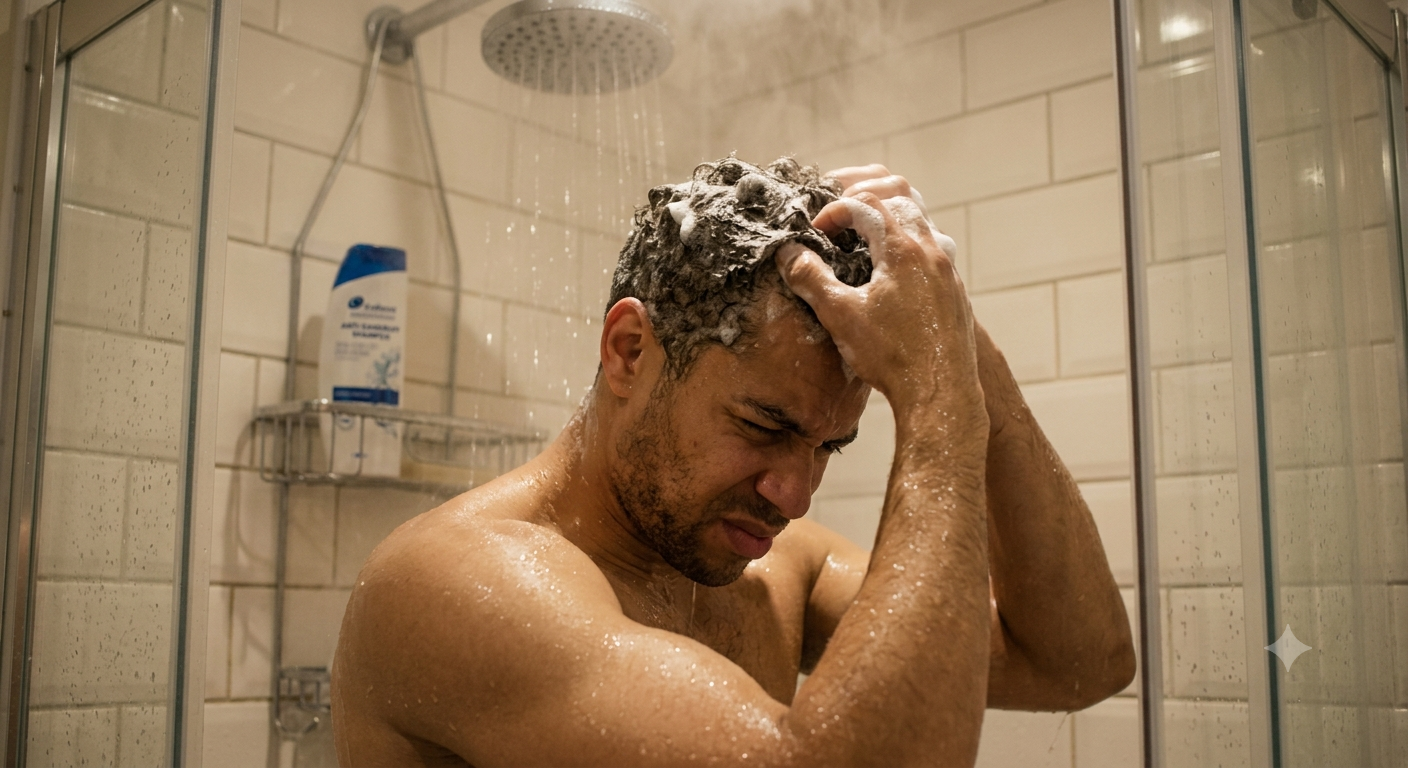
Your shampoo may not be the only problem. The water coming from your shower could be leaving minerals behind on your hair and scalp.
Hard water hair damage in men can make hair feel dull, difficult to style and more prone to tangling or breakage. It can also prevent shampoo and conditioner from working as effectively as expected.
The good news? You do not need to completely replace your routine. A few practical changes can help reduce mineral buildup and improve the condition of your hair.
What Is Hard Water?
Hard water contains higher levels of dissolved minerals, particularly calcium and magnesium.
These minerals are not normally dangerous to wash with. However, they can gradually collect on the hair, scalp, shower screen, taps and bathroom surfaces.
When minerals remain on your hair, they may create a thin coating that affects how your hair feels and responds to products.
Signs of Hard Water Hair Damage in Men
Hard water affects everyone differently, but common signs include:
-
- Hair feels rough after washing
-
- Shampoo does not lather easily
-
- Hair looks dull or lacks shine
-
- Scalp feels dry, itchy or tight
-
- Hair becomes difficult to manage
-
- Styling products stop working properly
-
- Hair feels coated or waxy
-
- Increased tangling and breakage
-
- Coloured hair fades quickly
-
- White mineral marks appear around the shower
Several of these symptoms can also be caused by unsuitable products, dandruff or scalp conditions. Therefore, consider your water quality alongside your full routine.
Does Hard Water Cause Hair Loss?
Hard water does not directly cause male-pattern baldness.
However, mineral buildup may contribute to dryness, tangling and breakage. When strands break, the hair may appear thinner or less healthy.
Scratching an irritated scalp can also damage the skin and weaken fragile hair.
See a GP or dermatologist if you experience sudden hair loss, bald patches, scalp pain or continued shedding. These symptoms may have causes unrelated to your water.
10 Easy Ways to Fix Hard Water Hair Damage in Men

1. Check Whether You Actually Have Hard Water
Before replacing every product in your bathroom, confirm whether hard water is likely to be the problem.
Look for:
-
- White marks around taps and shower screens
-
- Limescale inside the kettle
-
- Soap that struggles to form a lather
-
- A slippery or coated feeling after washing
-
- Regular mineral deposits on bathroom surfaces
You can also use a home water-hardness testing strip or check information from your local water supplier.
2. Use a Chelating Shampoo
A chelating shampoo is designed to bind to mineral deposits and help wash them away.
This is different from an ordinary shampoo, which mainly removes oil, sweat and styling products.
Look for ingredients such as:
-
- Disodium EDTA
-
- Tetrasodium EDTA
-
- Sodium phytate
-
- Citric acid
-
- Phytic acid
Chelating shampoos can be drying, so most men will not need to use one during every wash. Start occasionally and follow the product instructions.
3. Alternate With a Gentle Shampoo
Using a strong cleansing shampoo every day may remove natural oils and leave the scalp feeling dry.
Alternate your chelating or clarifying shampoo with a gentle shampoo designed for regular use.
Choose a shampoo based on your scalp:
-
- Oily scalp: lightweight balancing shampoo
-
- Dry scalp: gentle moisturising shampoo
-
- Sensitive scalp: fragrance-free or low-fragrance shampoo
-
- Dandruff-prone scalp: suitable anti-dandruff treatment
Concentrate shampoo on the scalp rather than aggressively rubbing the ends.
4. Condition After Every Deep-Cleansing Wash
Removing mineral buildup can make your hair feel cleaner, but it may also leave it temporarily dry.
Apply conditioner after using a chelating or clarifying shampoo. Focus mainly on the middle and ends of your hair.
Allow it to remain on your hair for the recommended time before rinsing thoroughly.
Ingredients such as glycerine, panthenol, fatty alcohols and ceramides can improve softness and manageability.
5. Consider a Proper Water-Softening System
A water softener reduces calcium and magnesium through an ion-exchange process.
This can provide a more complete solution than repeatedly removing minerals from your hair.
However, whole-home water softeners can be expensive and may not be practical for tenants or students.
Speak to your landlord before making permanent plumbing changes to rented accommodation.
6. Understand What Shower Filters Can and Cannot Do
A shower filter may help reduce chlorine, sediment or certain impurities, depending on its design.
However, many basic shower filters do not fully remove the calcium and magnesium responsible for hard water.
Check the product description carefully. Look for independent testing information rather than relying only on terms such as “purifying” or “softening.”
A proper water-softening system is generally more effective for reducing hardness minerals.
7. Try a Filtered Final Rinse
A simple temporary option is to use filtered or bottled water for the final rinse after washing your hair.
You do not need enough water for the entire shower. Use a small amount to rinse the middle and ends after removing your conditioner.
This method may be helpful when travelling or living in temporary accommodation where installing a softener is not possible.
However, it may become inconvenient or expensive as a long-term solution.
8. Use a Carefully Diluted Acidic Rinse
A mildly acidic rinse may help loosen some mineral residue and improve the feel of the hair.
Some people use diluted apple cider vinegar, while others choose ready-made acidic hair rinses.
For a simple DIY rinse, mix approximately one tablespoon of apple cider vinegar with a cup of water. Apply it after shampooing, avoid your eyes and rinse thoroughly.
Do not use an acidic rinse on a scratched, inflamed or highly sensitive scalp. Stop immediately if you experience burning or irritation.
Using it occasionally is safer than applying concentrated vinegar or using it during every wash.
9. Add a Lightweight Leave-In Conditioner
A leave-in conditioner can reduce friction, improve detangling and protect dry ends.
Apply a small amount to damp hair after washing. Start with less than you think you need, especially if your hair is fine or naturally oily.
Look for products containing:
-
- Panthenol
-
- Aloe vera
-
- Glycerine
-
- Amino acids
-
- Lightweight silicones
-
- Hydrolysed proteins
Avoid applying thick leave-in products directly to the scalp because they may increase buildup.
10. Reduce Heat and Rough Drying
Mineral-coated hair may already feel dry or difficult to manage. High heat can make it more vulnerable to breakage.
Use a medium or low setting on your hair dryer and keep it moving rather than holding it against one section.
Pat your hair gently with a soft towel instead of rubbing it aggressively. A microfibre towel or soft cotton T-shirt can help reduce friction.
Always use heat protection before blow-drying or styling.
A Simple Hard Water Hair Routine for Men
You do not need a complicated 10-product routine.
Try this basic approach:

Regular Wash
-
- Wet your hair thoroughly.
-
- Apply a gentle shampoo mainly to your scalp.
-
- Massage using your fingertips.
-
- Rinse completely.
-
- Apply conditioner to the middle and ends.
-
- Finish with a small amount of leave-in conditioner.
Occasional Mineral-Removal Wash
-
- Apply a chelating shampoo according to its instructions.
-
- Rinse thoroughly.
-
- Use a moisturising conditioner or hair mask.
-
- Detangle carefully.
-
- Apply heat protection before drying.
The right frequency depends on your water, scalp type and how much styling product you use.
Best Products for Hard Water Hair Damage
When choosing products, prioritise function rather than packaging.
Chelating Shampoo
Choose a formula specifically designed to remove mineral or metal buildup.
Gentle Everyday Shampoo
Use this between deeper cleansing washes to avoid stripping your scalp.
Moisturising Conditioner
Conditioner can help restore softness after mineral removal.
Leave-In Conditioner
A lightweight leave-in treatment can reduce tangling and protect dry hair.
Heat Protector
Heat protection is particularly important if you regularly use a hair dryer or straightener.
Hard Water Advice for Different Hair Types
Fine Hair
Fine hair can become flat and coated quickly.
Use lightweight conditioner and avoid applying oils close to the scalp. Mineral-removing shampoo may help restore volume when used appropriately.
Curly or Coily Hair
Curly hair can already be prone to dryness, and mineral buildup may make detangling more difficult.
Use plenty of conditioner, detangle gently and follow cleansing with a moisturising treatment.
Coloured or Bleached Hair
Hard water minerals may affect the appearance of coloured hair and make damaged sections feel rougher.
Choose colour-safe products and avoid excessive use of strong clarifying shampoos.
Oily Hair
Hard water buildup can sometimes make the scalp feel dirty even after washing.
Do not automatically increase shampooing. First, check whether mineral residue or heavy styling products are contributing to the coated feeling.
Common Mistakes to Avoid
Using Clarifying Shampoo Every Day
Frequent deep cleansing may irritate the scalp and increase dryness.
Applying Undiluted Vinegar
Concentrated vinegar may irritate the skin and damage the hair’s feel. Always dilute it properly.
Buying Any Product Labelled “Detox”
“Detox” is mainly a marketing term. Check whether the shampoo contains ingredients that can genuinely remove mineral buildup.
Ignoring Your Conditioner
Deep cleansing without conditioning can leave hair rough and tangled.
Assuming All Hair Loss Comes From Water
Continued thinning may be linked to genetics, stress, nutrition, medication or a medical condition. Do not delay professional advice when hair loss is persistent.
Frequently Asked Questions
How often should men use a chelating shampoo?
Many men may only need it occasionally, such as every few weeks. The ideal frequency depends on water hardness, scalp sensitivity and product buildup. Follow the instructions on the specific product.
Can hard water cause dandruff?
Hard water does not necessarily cause dandruff, but mineral buildup and dryness may increase flaking or irritation in some people.
Will boiling water remove hardness?
Boiling may reduce some temporary hardness, but it is not a practical method for regular hair washing and does not remove every type of dissolved mineral.
Can a shower filter completely soften water?
Most basic shower filters reduce chlorine or sediment but do not completely remove calcium and magnesium. Check whether a product is specifically designed and tested for water softening.
How long does it take for hair to improve?
Hair may feel cleaner after one mineral-removal wash. However, dryness and breakage may take several weeks of consistent care to improve.
Key Takeaways
Hard water hair damage in men is usually caused by calcium and magnesium collecting on the hair and scalp.
Common signs include dullness, roughness, buildup, tangling and difficulty creating a shampoo lather.
Using an occasional chelating shampoo, regular conditioner and gentler drying techniques can make a noticeable difference. A proper water-softening system offers a more complete solution, while filtered final rinses may help in temporary accommodation.
Most importantly, remember that hard water does not directly cause male-pattern baldness. Persistent shedding, bald patches or scalp inflammation should be assessed by a qualified healthcare professional.
Conclusion
Hard water can make even a good hair care routine feel ineffective. However, replacing every product is rarely necessary.
Start by confirming your water hardness, remove mineral buildup carefully and add moisture back into your hair. With the right shampoo, conditioner and washing routine, your hair can feel softer, cleaner and much easier to manage.