
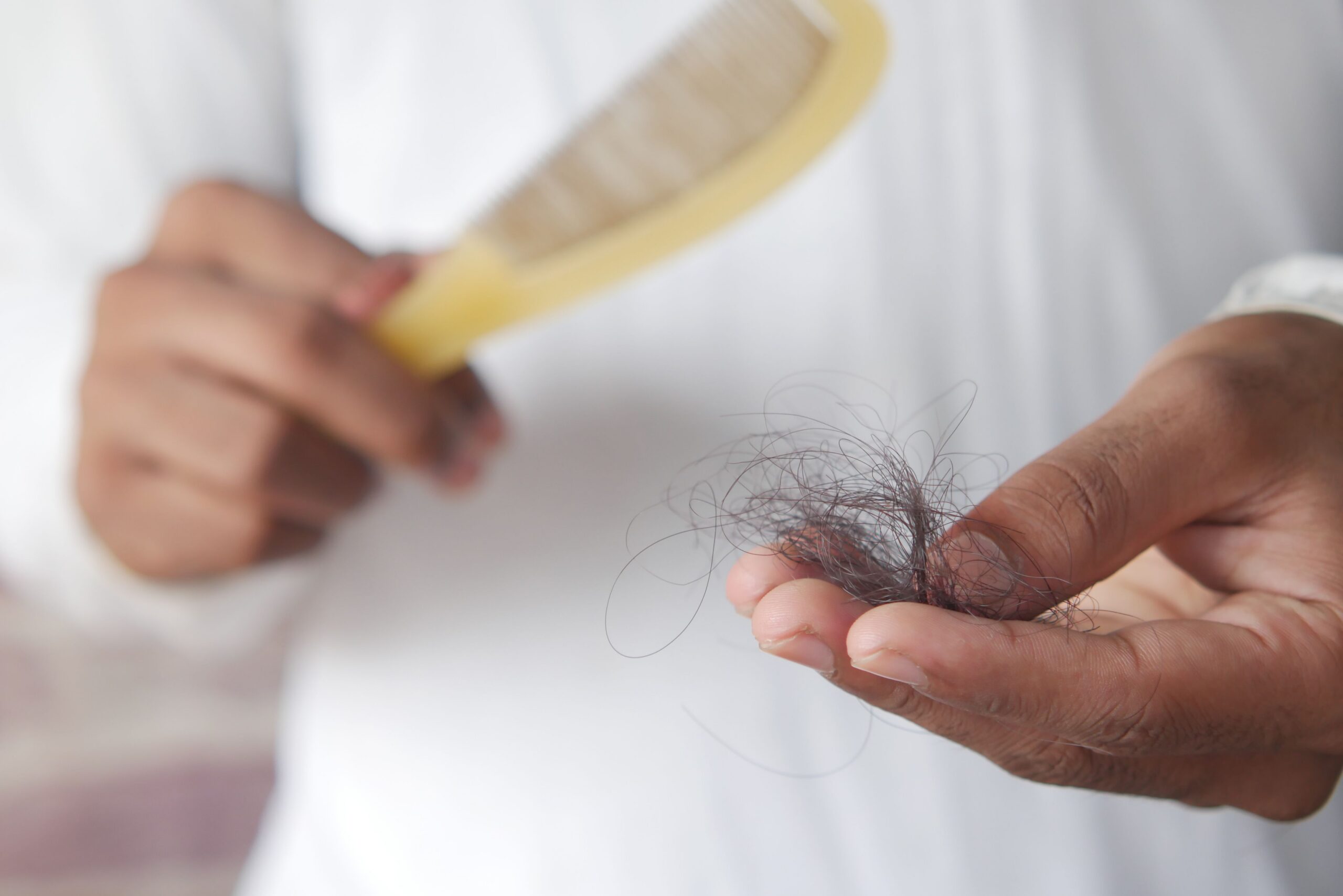
Have you noticed more hair than usual on your pillow lately?
Maybe your hairline looks slightly different in photos. Maybe your hairstyle does not have the same volume it used to. Or perhaps your barber mentioned that your crown looks thinner. These maybe an indication towards hair loss.
Before you panic, remember this:
Losing some hair every day is normal. Most men naturally shed around 50–100 hairs daily as part of the normal hair growth cycle.
The problem begins when shedding becomes excessive, your hair becomes noticeably thinner, or your follicles start producing weaker strands.
Here’s where many men get it wrong.
They wait until the hair loss becomes obvious before doing anything.
But early hair loss usually starts quietly. Your hairline changes slowly, individual hairs become thinner, and your scalp may become more visible before you notice a major difference.
Understanding the early signs of hair loss in men gives you the best chance of protecting your existing hair.
Step 1: Understand What’s Causing Your Hair Loss
1. Your Hairline Is Starting To Recede
A receding hairline is one of the most common early signs of male pattern baldness.
You may notice:
- Your temples look slightly higher
- Your hairline is forming an “M” shape
- The corners of your forehead are becoming more visible
- Your hairstyle does not sit the same way anymore
So, what is actually happening?
For many men, this is linked to androgenetic alopecia, also known as male pattern hair loss.
The main driver is a hormone called dihydrotestosterone (DHT). In genetically sensitive men, DHT gradually affects hair follicles, causing them to shrink. This process, called follicular miniaturisation, results in thinner and weaker hairs over time (Liu et al., 2025).
The important thing?
Your follicles usually do not disappear immediately.
They slowly become less productive.
What should you do?
Take monthly photos of your hairline under the same lighting.
Small changes are difficult to notice day-to-day, but comparisons over time can reveal whether your hairline is changing.
2. Your Crown Looks Thinner
Many men focus only on their hairline and forget about the crown.
But thinning at the top of the scalp is another common early warning sign.
You may notice:
- More scalp showing under bright lights
- Less volume when styling your hair
- Your hair appears flatter than before
- A visible thinning patch around the crown
This happens because affected follicles begin producing finer hairs.
Think of it like a thick rope becoming a thinner thread.
The number of hairs may not dramatically change at first, but each strand becomes weaker and provides less coverage.
Research shows that follicular miniaturisation and changes in the hair growth cycle are key characteristics of androgenetic alopecia (Chen et al., 2025).
What should you do?
Do not only check your hair from the front.
Use a mirror or ask someone you trust to check the crown area every few months.
3. You’re Losing More Hair Than Usual
Finding hair in the shower does not automatically mean you are going bald.
Hair naturally sheds.
However, pay attention if you notice:
- Sudden increases in shedding
- Hair falling out for several months
- Thinning across the entire scalp
- Reduced overall density
This could be related to several factors, including stress, illness, nutritional deficiencies, or hormonal changes.
One condition many men experience is telogen effluvium, where more hairs than normal enter the resting phase and shed.
The difference?
Male pattern baldness usually follows a predictable pattern, such as temple recession or crown thinning.
Telogen effluvium often causes more general shedding across the scalp (Liu et al., 2025).
What should you do?
Ask yourself:
- Have I been under unusual stress?
- Has my diet changed recently?
- Am I getting enough protein?
- Have I recently experienced illness?
Finding the cause is the first step.
Step 2: Fix The Common Mistakes That Can Affect Hair Health
Your Diet Could Be Affecting Your Hair
Let’s be honest.
Many men spend money on expensive hair products while ignoring the basics.
Your hair needs the right nutrients to grow properly.
Hair is mainly made from keratin, a protein structure, meaning low protein intake can affect hair strength and quality.
Focus on:
Protein
Add foods such as:
- Eggs
- Chicken
- Fish
- Greek yoghurt
- Lentils
- Beans
Iron and Zinc
These nutrients support healthy follicle function.
Good sources include:
- Red meat
- Seafood
- Nuts
- Seeds
- Leafy vegetables
Vitamin D and Omega-3
Low vitamin D levels have been associated with several hair disorders, while omega-3 fatty acids support overall scalp health.
The key?
Do not rely on supplements as a shortcut.
Build a balanced diet first.
Your Hair Routine Might Be Making Things Worse
Your everyday habits can affect how healthy your hair looks.
Common mistakes include:
Washing Too Aggressively
Using harsh shampoos or scrubbing too strongly can irritate the scalp and increase dryness.
Using Too Much Styling Product
Heavy products can create buildup and make thinning hair appear flatter.
Ignoring Scalp Health
A healthy scalp creates a better environment for healthy hair growth.
Simple improvements:
- Use a gentle shampoo
- Avoid excessive heat styling
- Clean styling products properly
- Avoid constantly pulling or damaging hair
Step 3: Build A Hair Growth Routine That Works
The biggest mistake men make?
Waiting until hair loss becomes impossible to ignore.
A better approach is building consistent habits early.
Morning Routine
Keep Your Scalp Clean
Choose products based on your scalp type rather than marketing claims.
Protect Your Hair
Avoid unnecessary heat and harsh styling.
Support Your Body
A balanced diet, exercise, and quality sleep all contribute to overall hair health.
Evening Routine
Track Changes
Take monthly photos.
Look After Your Scalp
Pay attention to itching, irritation, or excessive dryness.
Stay Consistent
Hair growth is a slow process. Results require patience and consistency.
For men with confirmed androgenetic alopecia, clinically studied treatments such as minoxidil and finasteride may help slow progression and support regrowth in suitable candidates (Gupta et al., 2025).
Always speak with a healthcare professional before starting medical treatments.
Different Hair Loss Situations: What Should You Do?
For Men With Oily Hair
Excess oil does not directly cause male pattern baldness, but scalp buildup can affect comfort and hair appearance.
Try:
- Washing regularly
- Avoiding heavy oils
- Choosing lightweight products
For Men With Dry Hair
Dry hair can make thinning look worse because strands become brittle and lose volume.
Try:
- Using conditioner regularly
- Avoiding excessive heat
- Reducing harsh chemical treatments
For Men Experiencing Hair Loss
Do not ignore gradual changes.
Start by:
- Tracking your hair loss pattern
- Taking photos
- Improving nutrition
- Seeking professional advice if thinning continues
Early action gives you more options.
For Men With Dandruff Or Scalp Irritation
Persistent dandruff is not just a cosmetic issue.
If you experience:
- Itching
- Redness
- Flaking
- Scalp discomfort
it is worth addressing.
A healthy scalp supports healthier hair.
Frequently Asked Questions
What are the first signs of hair loss in men?
The earliest signs are usually a receding hairline, thinning crown, reduced hair thickness, and increased shedding.
At what age does male pattern baldness start?
Male pattern baldness can begin after puberty, but many men notice visible changes during their 20s and 30s. Genetics play a major role.
Can early hair loss be reversed?
Some forms of hair loss can improve if the cause is identified and treated early. Genetic hair loss can often be managed with appropriate treatments.
Does stress cause hair loss in men?
Yes, severe stress can trigger temporary shedding known as telogen effluvium. However, stress-related shedding is different from genetic male pattern baldness.
Key Takeaways
- Hair loss usually starts gradually, not overnight.
- A changing hairline and thinning crown are common early warning signs.
- Hair thickness can decrease before obvious bald spots appear.
- Diet, scalp care, and healthy habits support stronger hair.
- Early action gives you more options for managing hair loss.
Final Thoughts
Hair loss can feel frustrating, especially when changes happen slowly and you are unsure what is normal.
The good news?
Your hair often gives you warning signs before major thinning happens.
Pay attention to your hairline. Check your crown. Notice changes in thickness and shedding.
Building a simple, consistent hair routine and acting early can help you maintain healthier-looking hair for longer.
Small changes today can make a big difference over time.
References
Chen, S., Li, L., Ding, W., Zhu, Y. and Zhou, N. (2025) ‘Androgenetic Alopecia: An Update on Pathogenesis and Pharmacological Treatment’, Drug Design, Development and Therapy, 19, pp.7349–7363.
Gupta, A.K., Talukder, M., Ravi, S.P., Taylor, D. and Wang, T. (2025) ‘Advances in the treatment of male androgenetic alopecia: current options and emerging therapies’, Journal of Cosmetic Dermatology.
Liu, Y., Tosti, A., Wang, E.C.E. et al. (2025) ‘Androgenetic Alopecia’, Nature Reviews Disease Primers, 11, Article 73.
Zhang, Y. et al. (2026) ‘Risk factors for androgenetic alopecia: a systematic review and meta-analysis’, BMC Public Health.
Bashir, B. (2024) ‘Androgenetic Alopecia: Update on Etiology, Pathophysiology, Diagnosis and Treatment’, International Journal of Pharmaceutical Sciences and Drug Research, 16(2), pp.286–292.
Piraccini, B.M. and Alessandrini, A. (2024) ‘Androgenetic alopecia: diagnosis and management’, Dermatologic Therapy.