
In this guide, you’ll learn how sleep for hair growth works, why poor sleep may affect your hair, and simple habits that can improve both your sleep and your hair health.
Do you stay up late scrolling on your phone and then wonder why your hair feels thinner, weaker, or sheds more than usual?
Most men think hair growth depends only on shampoo, oils, or supplements. But here’s something many overlook—your body does most of its repair work while you’re asleep.
💡 Did You Know?
Around 90% of your hair is in the active growth phase (anagen) at any given time. During deep sleep, your body releases growth hormone, repairs cells, and supports many of the processes that help keep hair healthy.
How important is Sleep for Hair Growth
Let’s break down how sleep impacts hair growth—and what you can do to support it.
1. Hair Grows While You Sleep
Hair follicles, like the rest of your body, follow a biological clock. During deep sleep—particularly the non-REM stage—your body enters repair and growth mode. This is when:
- Cell turnover increases
- Tissue repair takes place
- Hormone levels (like melatonin and growth hormone) rise
These factors support the anagen phase (active growth phase) of the hair cycle. Poor or broken sleep can shorten this phase and may contribute to slower growth or excess shedding over time.
2. Stress Hormones & Hair Loss
Sleep deprivation raises cortisol, the body’s main stress hormone. High cortisol levels are linked to several types of hair loss:
- Telogen Effluvium (stress-induced shedding)
- Androgenetic Alopecia (may worsen with stress)
- Alopecia Areata (autoimmune flare-ups can be stress-triggered)
Improving your sleep can lower cortisol and help reset the hair cycle, giving follicles the chance to grow uninterrupted.
3. Sleep and Blood Flow to the Scalp
Sleep boosts circulation and oxygen delivery to tissues, including the scalp. When you’re well-rested, the increased blood flow helps nourish follicles and supply them with the nutrients and oxygen needed for healthy hair.
4. Hormonal Balance and Hair Health
Good sleep supports balanced levels of oestrogen, testosterone, thyroid hormones, and melatonin—all of which impact the hair cycle. Disruption in any of these hormones, especially over time, can result in hair thinning or breakage.
Read our Article on How hormonal Imbalance affects sleep:
5. Melatonin May Stimulate Hair Growth
Melatonin—the sleep hormone—does more than regulate your circadian rhythm. Emerging research shows it may stimulate hair growth directly, possibly by prolonging the anagen phase.
Some topical melatonin products are even being studied as future hair loss treatments.
How Lack of Sleep Can Affect Your Hair
This is where things get interesting. Missing one night’s sleep probably won’t make your hair fall out.
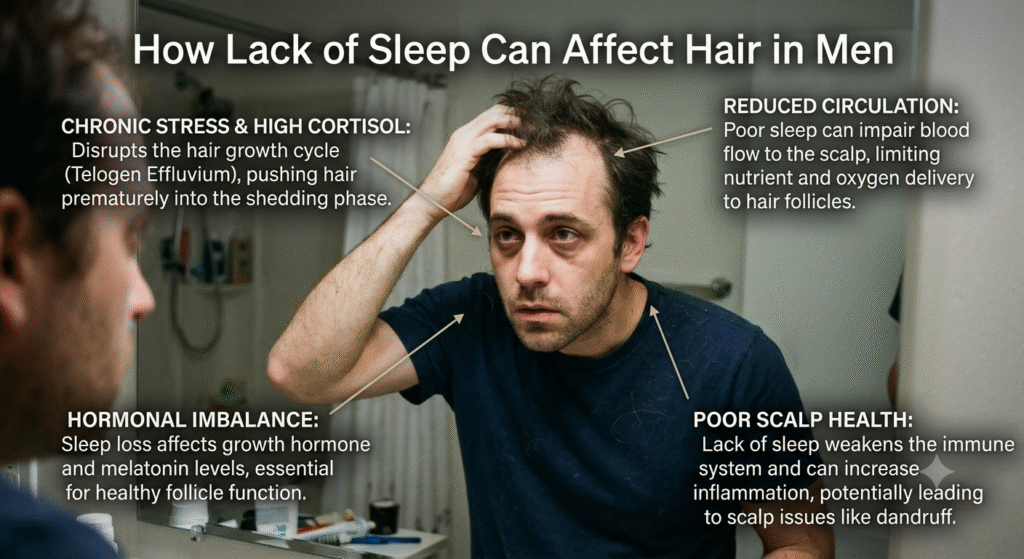
However, poor sleep over weeks or months may indirectly affect your hair in several ways.
Explain:
Higher cortisol (stress hormone) : Can contribute to increased hair shedding.
Less cell repair: Hair follicles recover more slowly.
Hormonal imbalance: Poor sleep can affect hormones that support healthy hair growth.
Increased inflammation: May affect scalp health.
Poor lifestyle habits: Less sleep often leads to poorer food choices, less exercise, and higher stress—all of which can influence hair health.
7 Simple ways to get Sound Sleep for Hair Growth
- Stick to a regular sleep schedule. Try to go to sleep around 10:30 p.m. and wake up at a consistent time each morning. A regular routine can help support your body’s natural sleep cycle.
- Avoid screens 30–60 minutes before bed. Put away your phone, laptop and television before bedtime. This can help your mind relax and prepare for a more restful night’s sleep.
- Reduce caffeine late in the evening. Avoid coffee, energy drinks and other caffeinated beverages several hours before bedtime, as caffeine can make it harder to fall asleep.
- Manage stress with meditation or deep breathing. Spend a few minutes practising meditation, slow breathing or gentle relaxation exercises before bed to calm your mind and reduce daily tension.
- Eat a balanced evening meal. Choose a nutritious and satisfying meal in the evening, while avoiding very heavy meals close to bedtime that may make you feel uncomfortable.
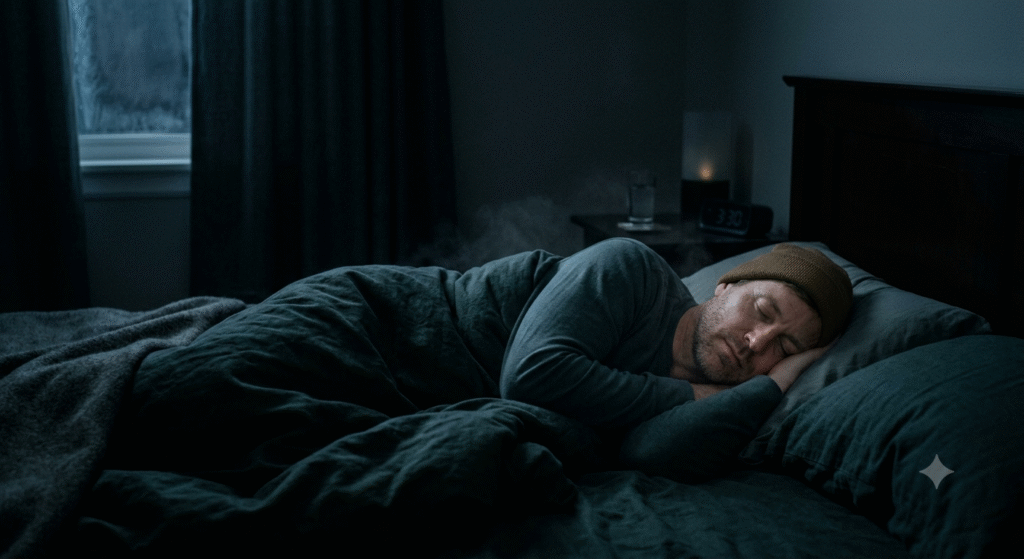
- Sleep in a cool, dark room. Keep your bedroom comfortable, quiet and dark to create an environment that encourages relaxation and supports better-quality sleep.
- Stay consistent. Follow your sleep routine regularly, including on weekends where possible. Consistency can help your body recognize when it is time to relax and prepare for sleep.
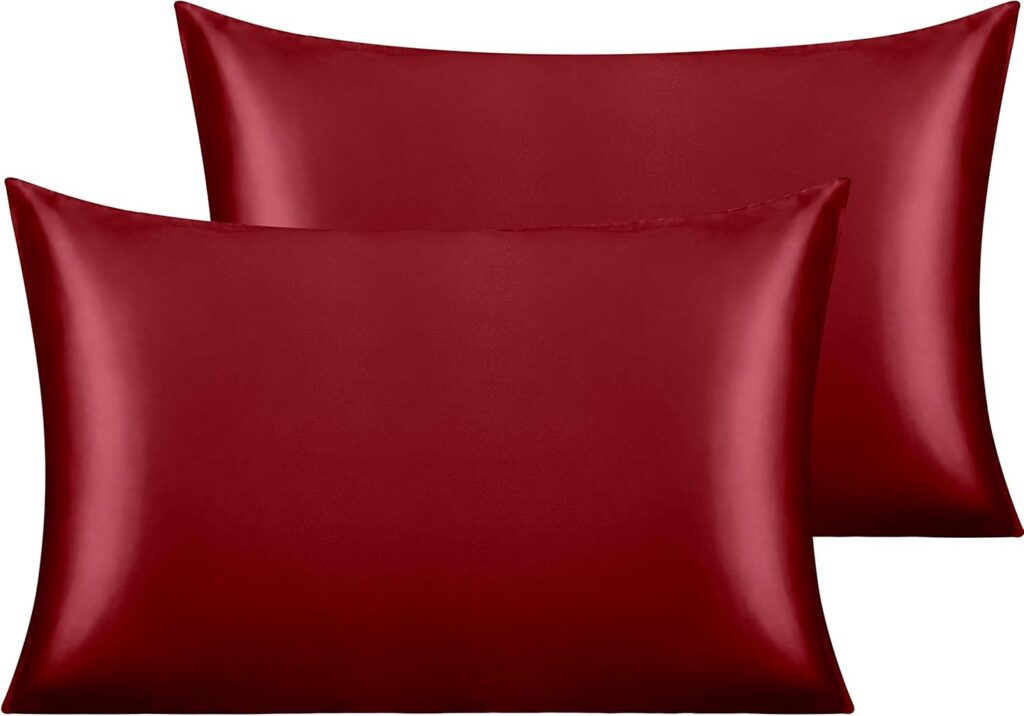
NTBAY Satin Pillowcases – Satin Pillowcase for Hair and Skin
NTBAY satin pillowcases are made with nice microfiber fabric for optimal softness and easy care. Cool in the summer and warm in the winter, a satin pillowcase is a luxury to be enjoyed throughout the year.
FAQs On Sleep for Hair Growth
Q1. Does sleep help hair growth?
Yes, good sleep supports healthy hair growth. Your body repairs cells and regulates hormones during sleep.
Q2. Can lack of sleep cause hair loss?
Poor sleep may contribute to increased hair shedding. Chronic sleep deprivation can increase stress and disrupt normal hair growth.
Q3. How many hours should I sleep for healthy hair?
Aim for 7–9 hours each night. Consistent, high-quality sleep supports your body’s natural repair processes.
Q4. Is sleeping with wet hair bad?
It’s best to avoid it. Wet hair is more fragile and can break more easily due to friction against your pillow.
Q5. Does a silk pillowcase help hair?
Yes, it may reduce friction and hair breakage. Silk pillowcases can also help minimise frizz.
Mr.Manable Recommnendations
You don’t need to follow all seven habits overnight.
Start with one or two simple changes and stay consistent. Better sleep won’t just improve your energy—it can also support healthier hair growth, improve skin health, and help you feel your best every day.
Key Takeaways on Sleep for Hair Growth
- Sleep is an important part of a healthy hair growth routine.
- Aim for 7–9 hours of quality sleep every night.
- Poor sleep may contribute to increased hair shedding and slower hair growth.
- Managing stress and maintaining good sleep habits supports scalp health.
- Combine good sleep with proper nutrition and a consistent hair care routine for the best long-term results.